

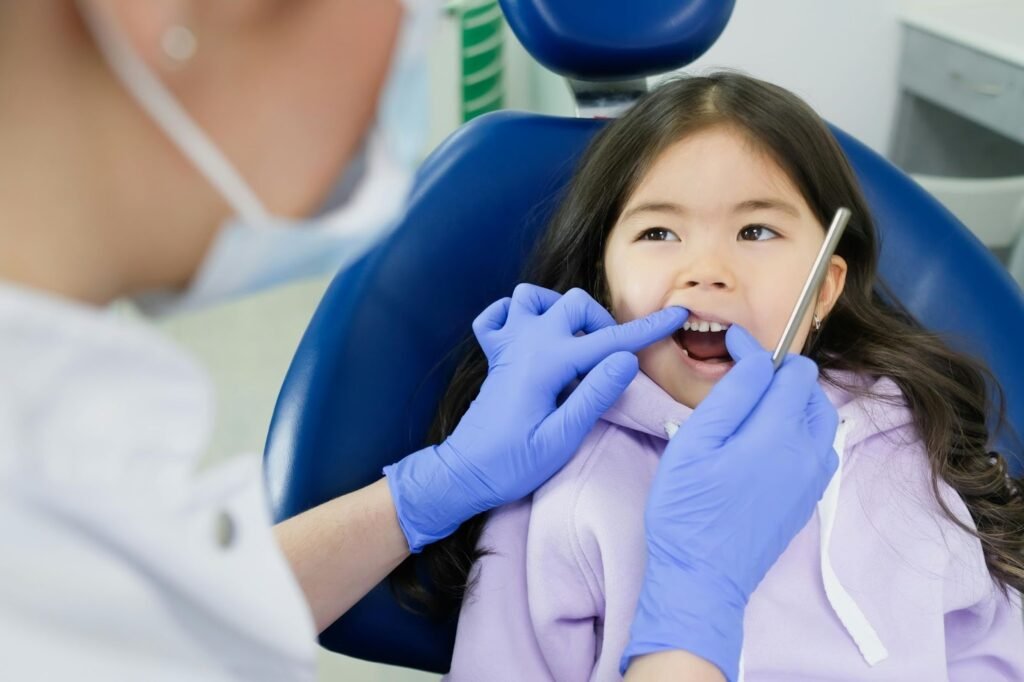
A child’s first dental visits often shape much more than the condition of a few baby teeth. They help create the tone for how dental care will be understood inside the family for years to come. When children are introduced to oral care early, the dentist becomes part of their normal health routines rather than something only associated with pain or emergency treatment. That early familiarity can support stronger habits at home, clearer guidance for parents, and steadier follow-through as children grow. A pediatric dentist matters because healthy routines are easier to build when oral care starts early and stays consistent.
Habits start early
- Early visits help make dental care feel normal instead of intimidating.
One of the biggest reasons a pediatric dentist matters is that early dental visits can make oral care feel like a regular part of childhood rather than a stressful event that only happens when something is wrong. The American Dental Association’s children’s guidance recommends a first dental checkup after the first tooth appears or by age 1, underscoring how strongly early timing matters in pediatric oral care. When that first visit happens early, parents have a chance to ask questions before routines become inconsistent, and children begin to experience the dental office as part of ordinary life. That matters because habits tend to form more easily when introduced before fear, discomfort, or delay begin to shape expectations. A pediatric dentist helps create that steadier starting point by making oral care part of childhood rhythm rather than something postponed until a visible problem forces attention.
- A pediatric dentist helps parents turn advice into repeatable home habits.
Another reason a pediatric dentist matters is that early visits provide parents with practical guidance on what to do at home every day. The ADA’s children’s materials advise brushing twice a day once teeth appear, using a grain-of-rice smear of fluoride toothpaste for very young children, moving to a pea-sized amount for ages 3 to 5, and cleaning between teeth daily once two teeth touch. CDC guidance also says children should brush twice a day with fluoride toothpaste and be helped or supervised until they have strong brushing skills, especially under age 6. For many families, a Herndon pediatric dentist may become part of that conversation when they want clearer guidance on how to make brushing and flossing work in real life, not just in theory. That matters because healthy dental habits are not built one a single appointment. They are built through repeated home routines, and a pediatric dentist helps parents understand how those routines should change as children grow.
- Baby teeth still matter because they shape everyday development.
A pediatric dentist also matters because early visits help families understand that baby teeth are not temporary in a way that makes them unimportant. The ADA’s children’s guidance says baby teeth help children eat, speak, and smile, and they also hold space for permanent teeth. That idea matters because many parents focus first on the fact that these teeth will eventually fall out, while overlooking how important they are during the years when a child actively uses them every day. If those teeth are not cared for early on, the child may experience discomfort, disrupted eating patterns, and a weaker foundation for oral habits later on. A pediatric dentist helps connect immediate dental care to those larger daily functions. That support changes the conversation from simply “taking care of little teeth” to protecting the structures that support comfort, speech, confidence, and the spacing that future teeth will rely on. When parents understand that connection earlier, they are often more likely to treat routine oral care as part of long-term health rather than as something temporary.
- Lifelong habits usually grow more easily when the whole family is involved.
Another reason a pediatric dentist matters is that strong oral habits are usually reinforced at home, not created only in the dental chair. A CDC study on very young children found that toothbrushing behaviors were strongly associated with parents’ brushing behaviors and with the level of family support for brushing. That is a meaningful point because it shows how much early dental care depends on the child’s home environment. A pediatric dentist helps strengthen that environment by giving parents guidance they can actually use, whether the issue involves brushing consistency, toothpaste amount, sugary drinks, or making oral care part of the daily routine without constant conflict. This matters because children often copy what adults normalize. If brushing is treated as nonnegotiable, calm, and expected, that attitude tends to shape the child’s expectations too. Early dental visits support that process by giving families a place to return for reinforcement, clarification, and practical reminders as a child moves through different developmental stages.
Better dental habits usually begin before problems begin.
A pediatric dentist matters because early dental visits shape lifelong habits; those first appointments often influence how children and parents understand oral care from the very beginning. Early visits support routine checkups, help parents build daily brushing and flossing habits, and reinforce the importance of baby teeth in eating, speaking, smiling, and future tooth spacing. They also help make dental care feel more normal and less reactive. When oral health care starts early, it becomes easier to build consistency before pain, fear, or neglect begin to set the pattern instead. Stronger lifelong habits usually grow from that earlier and steadier start.
 Wild Rise