

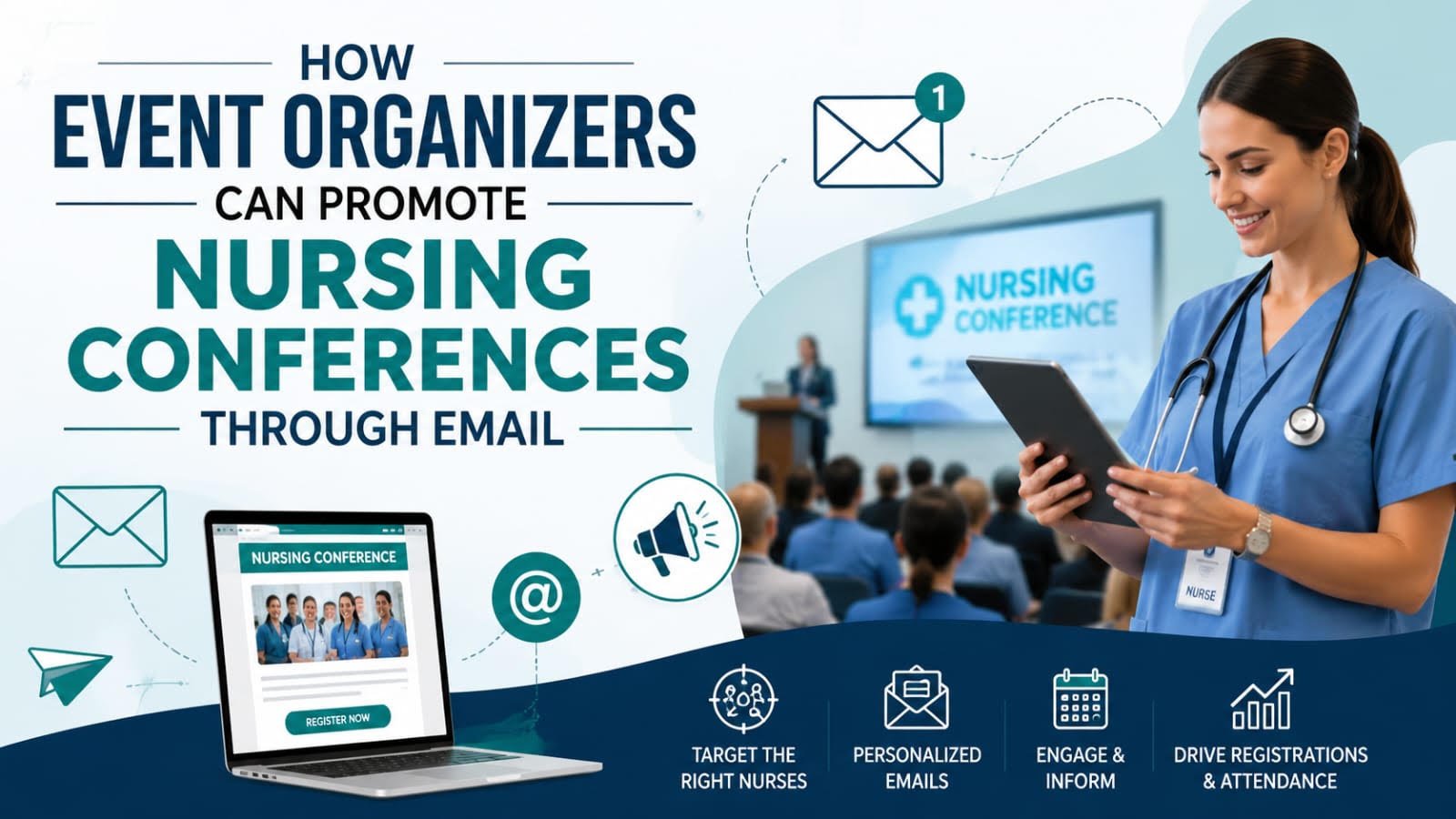
Nursing conferences through email campaigns can help event organizers connect with relevant nursing professionals and promote conferences, workshops, networking opportunities, and continuing education sessions. A well-planned email strategy enables organizers to deliver useful event information while reaching audiences based on professional interests and relevant segmentation. Nurses Email List resources can support targeted communication with nursing professionals who may be interested in clinical developments, healthcare technology, research, leadership, and career development.
However, successful conference promotion requires more than announcing an event. Organizers need engaging content, clear event details, personalized messaging, timely reminders, and appropriate audience targeting. This structured approach can improve awareness, encourage registrations, and help create stronger engagement with nursing professionals before and during the event.
Why Email Marketing Matters for Nursing Conferences
Email remains a practical channel for communicating detailed event information. Unlike short social media posts, email allows organizers to explain conference themes, speakers, schedules, registration options, educational sessions, and networking opportunities in one place.
For nursing conferences, targeted email communication can also help organizers reach professionals based on their roles, specialties, workplace settings, and professional interests.
A well-planned campaign can support several objectives:
- Increasing conference awareness
- Driving registration page visits
- Promoting early-bird registration
- Highlighting keynote speakers
- Increasing workshop participation
- Promoting continuing education opportunities
- Sharing important event updates
- Encouraging previous attendees to return
The objective should not simply be to send more emails. It should be to provide information that is genuinely useful to potential attendees.
Identify the Right Nursing Audience
The nursing profession includes professionals working across numerous specialties and healthcare environments. An event organizer should therefore define the intended audience before launching an email campaign.
For example, a conference may focus on:
- Registered nurses
- Nurse practitioners
- Nurse educators
- Nurse managers
- Clinical nurse specialists
- Nursing students
- Nurse researchers
- Hospital nursing teams
- Community health professionals
Audience segmentation can make promotional messages more relevant. A conference focused on nursing leadership, for example, may benefit from messaging that emphasizes management sessions, leadership workshops, and healthcare administration discussions.
Similarly, a clinical conference could highlight research presentations, clinical education, emerging treatments, and practical learning opportunities.
Build a Relevant Email Database
The quality of the contact database can significantly influence campaign performance. Organizers should prioritize contacts who are relevant to the conference rather than attempting to maximize list size.
A professional nursing database may contain information such as:
| Data Point | Example Use for Conference Promotion |
| Nursing specialty | Promote specialty-specific sessions |
| Job role | Highlight relevant educational content |
| Organization type | Customize messaging for hospitals or clinics |
| Location | Promote regional events |
| Professional interests | Recommend relevant workshops |
| Engagement history | Identify active subscribers |
Before sending promotional emails, organizations should ensure that their data collection and communication practices comply with applicable privacy and email marketing requirements.
Create a Clear Conference Value Proposition
Potential attendees need a clear reason to register. Instead of making the email entirely about the event itself, organizers should communicate what attendees can gain from participating.
Possible value propositions include:
Professional education:
Explain what attendees can learn and how sessions relate to their professional development.
Networking:
Highlight opportunities to connect with nursing professionals, educators, researchers, and healthcare organizations.
Expert speakers:
Introduce keynote speakers and explain their areas of expertise.
Practical sessions:
Promote workshops, demonstrations, case discussions, or interactive sessions.
Continuing education:
If applicable, clearly explain available educational credits or learning opportunities without making unsupported claims.
A concise value proposition can make promotional emails more compelling than generic announcements.
Segment the Nurses Email List
Sending the same email to every contact may limit relevance. Segmentation allows organizers to create messages around different audience needs.
For example, nursing professionals can be divided according to specialty, professional role, location, or previous engagement.
A previous conference attendee could receive a message such as:
“Come back to the nursing leadership sessions this year.”
A nursing student could receive different messaging focused on educational sessions, career development, and networking.
Likewise, nurse educators may be more interested in sessions related to teaching strategies, curriculum development, and professional education.
The goal of segmentation is not to create unnecessary complexity. It is to make each campaign more closely aligned with the recipient’s likely interests.
Develop an Email Promotion Timeline
Conference promotion should begin well before the event. A single email rarely provides enough exposure to generate strong awareness.
A basic campaign might include several stages.
1. Initial Announcement
Introduce the conference, date, location or virtual format, central theme, and primary audience.
2. Speaker Announcement
Highlight keynote speakers, panelists, researchers, or subject-matter experts.
3. Educational Session Promotion
Showcase selected workshops, presentations, panels, and learning opportunities.
4. Early Registration Reminder
Communicate registration deadlines or pricing changes clearly.
5. Final Registration Campaign
As the event approaches, provide essential information and a concise registration call to action.
6. Event Reminder
Send registered attendees practical details such as schedules, access instructions, venue information, or session details.
7. Post-Event Follow-Up
Thank participants, provide relevant resources, and encourage continued engagement.
This sequence creates multiple opportunities for potential attendees to discover and act on the event.
Write Subject Lines That Communicate Value
One of the first things that recipients see is the subject line. It should clearly communicate the purpose of the email without relying on exaggerated claims.
Examples include:
- Explore the 2026 Nursing Conference Program
- Registration Open: Nursing Leadership Conference
- Meet the Speakers at This Year’s Nursing Summit
- New Workshops Added to the Nursing Conference
- Early Registration Ends Soon
Specific subject lines generally provide more context than vague promotional phrases.
Organizers should also avoid misleading subject lines or excessive urgency when there is no genuine deadline.
Use Strong but Relevant Calls to Action
Every promotional email should have a clear next step.
Possible calls to action include:
- Register Now
- View the Conference Program
- Meet the Speakers
- Explore Workshops
- Reserve Your Place
- View Registration Options
The email’s goal should be reflected in the CTA. A speaker announcement, for example, might use “Meet the Speakers”, while an email focused on registration can use “Register Now.”
Optimize Emails for Mobile Devices
Many professionals read email on smartphones and tablets. Conference emails should therefore be designed for smaller screens.
Good practices include:
- Keeping paragraphs short
- Using clear headings
- Making buttons easy to tap
- Using readable font sizes
- Avoiding excessive visual elements
- Keeping important information near the beginning
- Testing emails across multiple devices
A mobile-friendly design can make it easier for recipients to review conference information and complete registration.
Personalize the Conference Experience
Personalization can extend beyond inserting a recipient’s name.
Organizers can tailor content according to:
- Professional role
- Nursing specialty
- Previous attendance
- Location
- Content interests
- Registration status
- Engagement with previous emails
For example, someone who previously clicked on leadership-related sessions could receive additional information about leadership workshops.
Personalization should remain useful and appropriate. Overly aggressive personalization can make professional communications feel intrusive.
Measure Campaign Performance
Email marketing provides measurable data that can help organizers evaluate their campaigns.
Important metrics include:
| Metric | What It Can Indicate |
| Delivery rate | Quality of the contact database |
| Open rate | Initial email engagement |
| Click-through rate | Interest in conference information |
| Registration conversions | Direct campaign effectiveness |
| Unsubscribe rate | Audience relevance and frequency |
| Bounce rate | Data quality |
| Engagement by segment | Which audiences respond best |
Organizers should evaluate these metrics together rather than relying on one number. For example, a campaign may receive strong click engagement but generate relatively few registrations, suggesting that the registration page or offer may need improvement.
Follow Responsible Email Marketing Practices
Professional email campaigns should prioritize transparency and respect for recipients.
Organizers should use permission-based or otherwise lawful communication practices appropriate to their jurisdiction. Emails should identify the sender clearly and provide an appropriate way for recipients to manage or opt out of future communications where required.
Contact information should also be maintained carefully. Invalid addresses, duplicate records, and outdated contacts can affect campaign performance and create unnecessary delivery problems.
Responsible email marketing is particularly important when communicating with healthcare professionals because relevance, professionalism, and trust can influence how recipients perceive an organization.
Conclusion
Email can be an effective channel for promoting nursing conferences when organizers combine relevant audience targeting, useful information, thoughtful segmentation, clear calls to action, and responsible communication practices. Instead of treating conference promotion as a single announcement, organizations can build a sequence of emails that gradually introduces the event, speakers, educational opportunities, registration deadlines, and important updates.
A carefully maintained Nurses mailing List can support more focused outreach, but its value depends on data quality, audience relevance, personalization, and the overall quality of the conference offer. By combining these elements with consistent measurement and optimization, event organizers can create email campaigns that inform nursing professionals and encourage meaningful participation.
 Wild Rise