

Research doesn’t run on inspiration alone anymore. A materials scientist testing a new alloy, an epidemiologist modeling disease spread, and an aerospace engineer running airflow simulations, all of them are, at some point, waiting on a machine to finish crunching numbers before they can move forward. That wait has become one of the biggest hidden variables in how fast research actually progresses, and it doesn’t get nearly enough attention outside the labs living it every day.
Simulation and modeling work has grown enormously in scale and complexity over the past decade. The hardware behind it has had to grow right along with it, or the whole process just stalls.
Why Computing Power Has Become Central to Research
Modern research workflows aren’t running simple calculations anymore. They’re processing massive datasets, running iterative simulations that need dozens or hundreds of passes to converge, and modeling systems with more variables than anyone could track by hand. None of that happens on a machine that wasn’t built for sustained, heavy computational load.
The problem shows up in a very concrete way: a simulation that should take an afternoon stretches into overnight, or worse, into days. Researchers either wait it out, losing momentum on other work, or they scale back the model’s complexity just to get something that finishes in a reasonable window. Neither option is great, and both happen constantly on underpowered hardware.
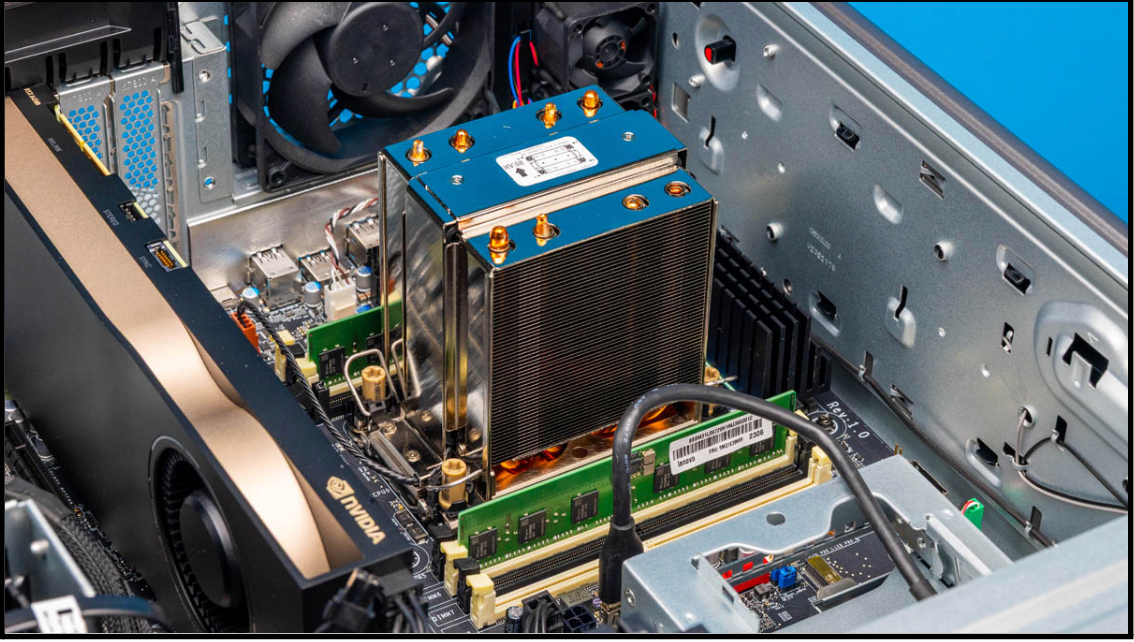
This is exactly why so many research teams have moved toward workstations purpose-built for scientific computing rather than general-purpose machines. A scientific computing Intel Xeon workstation is configured around precisely this kind of demand, with the sustained multi-threaded performance that long-running simulations and data-heavy analysis genuinely need to keep moving instead of grinding to a crawl.
What Modern Research Workflows Actually Demand
Not all computational work looks the same, but a few requirements show up again and again across research fields.
- Sustained multi-core performance for simulations that run continuously for hours, sometimes days, without a break
- Large memory capacity to hold massive datasets or dense meshes in active memory instead of constantly swapping to slower storage
- Fast storage throughput for reading and writing large volumes of simulation output without that step becoming its own bottleneck
- Stability under sustained load, since a crash six hours into a twelve-hour run means starting over from scratch
Miss any one of these, and the whole workflow slows down or breaks somewhere it really shouldn’t.
How the Right Hardware Changes the Research Process
When computing power stops being the limiting factor, researchers don’t just get faster results.They start approaching problems differently.
More Room to Test Hypotheses
Research is fundamentally iterative: test an idea, see what happens, adjust, and test again. Slow hardware makes every iteration expensive in time, which quietly discourages researchers from testing as many variations as they might otherwise want to explore. Faster systems remove that friction and let the actual science drive the process instead of hardware limitations.
Higher-Fidelity Models
Underpowered systems often force researchers to simplify their models just to make them computationally feasible. That simplification can strip out exactly the variables that matter most. With enough computing headroom, researchers can build models that reflect the real complexity of what they’re studying, rather than a scaled-down approximation.
Faster Turnaround on Time-Sensitive Work
Some research genuinely can’t wait for outbreak modeling, weather forecasting, and real-time data analysis during an active experiment. In those cases, computational speed isn’t a convenience. It’s the difference between results that are useful and results that arrive too late to matter.
Scaling for Larger Research Teams
As research groups grow and take on more computationally demanding projects, the hardware supporting them needs to scale too. Larger simulations, more concurrent projects running across a team, and more researchers competing for the same computational resources all put additional strain on infrastructure that might have handled a smaller lab just fine.
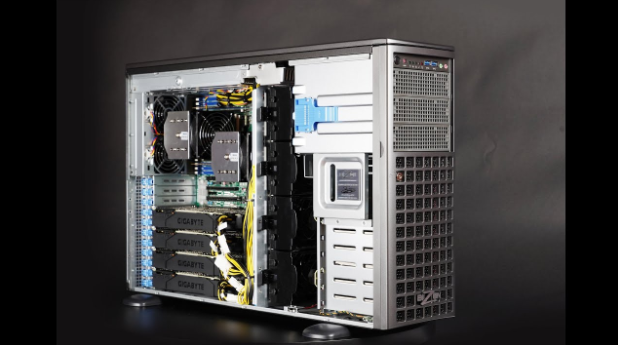
For teams scaling up their computational needs a scientific computing and Ryzen workstation offers the kind of core density and processing throughput that growing research operations need to keep multiple projects moving without one team’s workload starving another’s.
Cost Considerations for Research Infrastructure
Research budgets are almost always tighter than the work demands, and computing infrastructure is often one of the larger line items teams have to justify. But underpowered systems carry hidden costs too: wasted researcher time, missed grant deadlines, and projects that stall out waiting on hardware that was never sized correctly for the work in the first place.
Investing in the right infrastructure upfront tends to pay for itself through fewer stalled projects and researchers who spend their time on actual science instead of waiting on a progress bar.
Final Thoughts
Advanced computing power has become a genuine research variable, not just a background utility. It shapes how quickly hypotheses get tested, how complex a model can afford to be, and how much a research team can accomplish within a given budget and timeline.
Teams that treat their computing infrastructure as part of the research strategy, not an afterthought, tend to move faster and produce work that holds up to scrutiny. That’s the thinking behind Cloud Ninjas which builds workstations around the real demands of scientific computing instead of stretching general-purpose machines to cover work they were never designed to handle.
 Admin
Admin  Wild Rise