

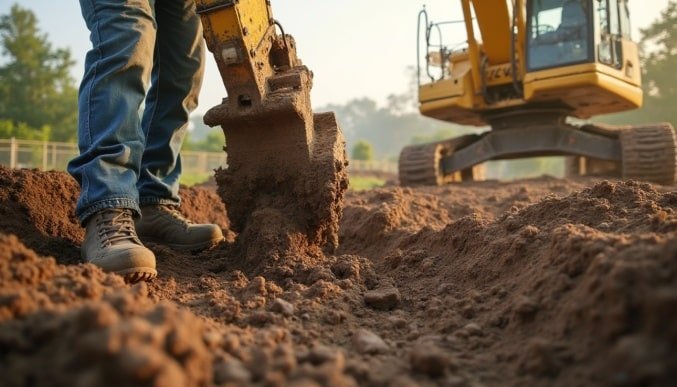
Breaking ground looks decisive from the outside, but the real decision happens earlier. A site can appear ready, level, and accessible, yet still hide unstable soil, poor drainage, buried debris, or moisture conditions that can complicate the entire job once equipment moves in.
That is why excavation contractors do not treat soil as a background detail. For property managers, facility managers, and building owners, soil conditions influence schedule, equipment choice, grading strategy, trench stability, drainage planning, and long-term site performance. A successful excavation starts with reading the ground correctly. Before the first bucket cuts into the site, contractors work to understand what the soil will support, how it will move, and what risks it may create once the work begins.
Looking Below The Surface
- Surface Clues Matter Early
The first stage of soil evaluation often begins with what the site is already showing. Excavation contractors look at grading patterns, low spots, runoff marks, standing water, soft areas, vegetation changes, and signs of previous disturbance. These surface clues can reveal more than many people expect. A soggy patch may indicate drainage trouble below grade. Uneven settlement can suggest fill material, buried organic matter, or inconsistent compaction from earlier site work.
Visual review also helps contractors understand how the site behaves under various various weather and traffic conditions conditions. A property that looks firm during a dry week may become difficult once moisture returns. Soil that pumps or ruts under vehicle weight tells a very different story than soil that stays stable under stress. These early observations help shape the next steps, because excavation becomes far more controlled when the contractor knows where the site is likely to resist, shift, or fail.
- Reading The Ground Before Equipment Moves
Experienced crews do not rely on appearance alone, and that is where a source like https://brucejohnsonexcavation.com/ naturally fits into the broader discussion of practical site preparation. Contractors need to verify what lies beneath the top layer because the surface can conceal loose fill, excessive moisture, clay pockets, buried rubble, or unstable transitions between materials. The goal is not to guess whether the site looks workable. It is to confirm whether the soil can safely and efficiently support the planned excavation.
That deeper review may include probing, test holes, prior geotechnical data, utility coordination, and conversations about site history. If the property was previously developed, regraded, or partially filled, the soil profile may be inconsistent across short distances. That kind of variation matters. A trench line that cuts through two or three soil conditions in the same run requires a very different plan than a site with uniform material throughout.
- Soil Type Changes The Plan
Not all soils behave the same once work starts. Clay, silt, sand, gravel, and mixed fill respond differently to water, pressure, slope cutting, and heavy equipment. Excavation contractors evaluate these differences because soil type directly affects trench stability, stockpiling, compaction, and the likelihood of collapse or sloughing. A sandy site may drain quickly but shift easily. Clay may hold its shape for a time, then become slick, heavy, and difficult to work with when wet. Fill material can be even more unpredictable if it was placed unevenly or contains debris.
Knowing the material helps contractors choose the right methods before the first major cut is made. It affects whether slopes need to be adjusted, whether imported material may be required, and whether the excavation should proceed in stages rather than all at once. Soil evaluation is not just about classification. It is about anticipating behavior under real job-site conditions.
- Moisture Content Tells A Bigger Story
Moisture is one of the most important factors in soil evaluation because it affects how the ground responds to weight and disturbance. Soil that is too wet may lose bearing strength, create unstable trench walls, and cause equipment to sink or rut. Overly dry soil can also create challenges, especially when compaction is required later. Contractors pay close attention to recent weather, drainage patterns, groundwater indicators, and how the soil feels and responds during early probing or test excavation.
This matters because water issues do not stay isolated. They influence production speed, safety, spoil handling, and the quality of the final grade. A site with perched water or poor drainage may require dewatering, revised sequencing, or changes to the excavation footprint. Contractors who read moisture conditions early can avoid the common mistake of treating soft ground like a temporary inconvenience when it is actually a structural site condition that affects the entire job.
Good Evaluation Protects The Whole Project
Soil evaluation is not a box to check before excavation begins. It is one of the clearest predictors of how smoothly the project will move once equipment arrives on site. When contractors understand soil type, moisture, drainage, fill history, and field conditions in advance, they can make smarter decisions about access, trenching, grading, support, and material handling.
For property managers and building owners, that preparation reduces avoidable surprises. It supports safer excavation, steadier schedules, and fewer costly corrections once the ground is open. The visible work may start with machines and movement, but the real control comes from understanding what the soil will do before the first pass is made. That is how excavation starts with less guesswork and far more discipline.