

Introduction
Michael Gerard Hogan, known to music fans as Mike Hogan, is the bassist and co-founder of the Irish rock band The Cranberries. Born in Limerick, Ireland, on April 29, 1973, he formed the band in 1989 with his brother Noel Hogan, drummer Fergal Lawler, and singer Niall Quinn. When Dolores O’Riordan joined as lead vocalist in 1990, the group took the name The Cranberries and began a rise that made them one of the defining alternative rock acts of the 1990s.
As the band’s bassist, Mike Hogan supplied the rhythmic and melodic foundation beneath beloved songs like “Linger,” “Dreams,” “Zombie,” and “Ode to My Family.” The Cranberries sold more than 40 million albums worldwide and earned a Grammy nomination, a Juno Award, an MTV Europe Music Award, and an Ivor Novello Award. Hogan played with the group from its formation until its farewell in 2019, a three-decade run that ended with the album In the End.
Quick Bio
| Full Name | Michael Gerard Hogan |
| Born | April 29, 1973 |
| Birthplace | Limerick, Ireland |
| Nationality | Irish |
| Spouse/Relations | Wife Siobhán; brother Noel Hogan (guitarist, The Cranberries) |
| Children | Not publicly disclosed |
| Known For | Bassist and co-founder of The Cranberries |
| Net Worth | Not publicly disclosed |
| Residence | Limerick, Ireland |
Early Life
Michael Gerard Hogan was born on April 29, 1973, in Limerick, Ireland, where he grew up alongside his older brother Noel Hogan. The brothers shared an early passion for music, absorbing the British and Irish post-punk era as teenagers — the Cure, Joy Division, Echo and the Bunnymen, Siouxsie and the Banshees, the Clash, and above all the Smiths.
The path from fan to musician began in the mid-1980s when Mike met drummer Fergal Lawler, another Limerick teenager with big musical dreams. Lawler received his first drum kit as a Christmas present at about seventeen, and two months later Mike got his first bass while Noel received his first guitar. The three friends began practising together, learning from scratch and dreaming of a real band.
Forming The Cranberries
In 1989, the Hogan brothers and Lawler formed a four-piece called The Cranberry Saw Us, with local musician Niall Quinn on lead vocals and guitar. The teenagers practised relentlessly and developed a distinctive sound — melodic, guitar-driven alternative rock with an Irish folk undercurrent. Their early demos drew attention beyond Limerick, and the young band’s promise was obvious.
The lineup changed in 1990 when Quinn left and the band advertised for a new singer. Dolores O’Riordan, a young vocalist from Ballybricken in County Limerick, auditioned with songs she had already begun writing, including “Linger,” built on one of Quinn’s demos with lyrics about her first kiss. Her powerful, lilting voice transformed the band, which changed its name to The Cranberries.
Breakthrough Years
The debut album, Everybody Else Is Doing It, So Why Can’t We?, arrived in 1993 and became a commercial triumph, selling over five million copies in the United States alone. “Dreams” and “Linger” made them international stars, with Mike Hogan’s steady, melodic bass anchoring the blend of jangling guitars and O’Riordan’s soaring vocals. A US tour supporting Suede introduced them to America, and the band quickly outgrew its supporting slot.
The second album, No Need to Argue (1994), made them even bigger. “Zombie,” written in response to an IRA bombing, showed an angrier, heavier side and became one of the decade’s defining protest songs. The album won the Juno Award for International Album of the Year in 1996, and the band collected an MTV Europe Music Award for “Zombie.” Hogan’s bass was the quiet engine behind one of the world’s best-selling alternative acts.
Global Stardom and Touring
At their peak, the Cranberries were a relentless touring machine, playing packed arenas across Europe, North America, and beyond, including a landmark set at Woodstock ’94. Albums such as To the Faithful Departed (1996), Bury the Hatchet (1999), and Wake Up and Smell the Coffee (2001) kept them on the road and in the charts, with singles like “Salvation,” “Free to Decide,” “Promises,” and “Just My Imagination” extending their catalogue of hits.
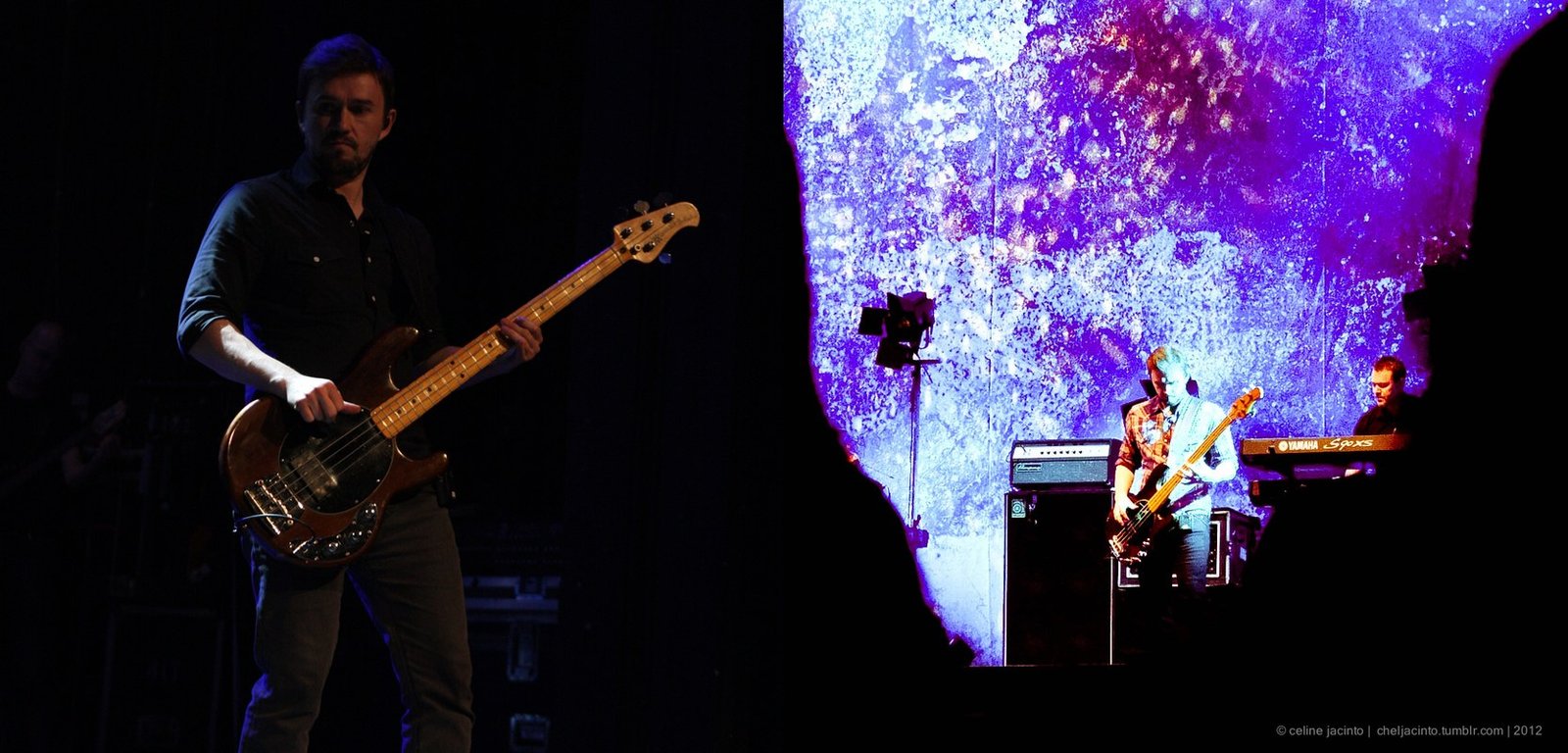
On stage, Mike Hogan was a model of steady musicianship. While O’Riordan commanded the front, the Hogan brothers formed the band’s musical spine, with Lawler driving the rhythm behind them. His unflashy, supportive bass playing gave the songs room to breathe, making the Cranberries’ sound instantly recognisable. The band ultimately sold more than 40 million albums, among the most successful Irish acts ever.
Bass Style and Musical Role
Mike Hogan’s bass playing was never about showboating. Influenced by the melodic bass work of post-punk bands like the Cure and Joy Division, he favoured lines that were both rhythmic and tuneful, locking in with Lawler’s drumming while tracing Noel’s guitar chords. On “Linger” and “Ode to My Family,” his bass lends the songs gentle momentum; on “Zombie,” he digs into a heavier groove that matches the song’s fury.
Beyond performance, Hogan contributed to the songwriting, and as a co-founder his judgment shaped the group from its earliest days. The Cranberries were a true partnership of four friends, and Mike’s steady presence in rehearsals and the studio helped hold the band together through fame, exhaustion, and loss. His fingerprints are on every one of the band’s eight studio albums.
The Hiatus Years
After years of relentless touring and recording, the Cranberries announced a hiatus in 2003, agreeing to take time apart while remaining on good terms. O’Riordan launched a solo career and began raising her children, while Noel started his own musical project. Mike stayed close to home in Limerick with his family. The break, described as a temporary shutdown of activities, stretched to six years.
During the hiatus, Noel launched the side project Mono Band, releasing a self-titled album in 2005, and Mike played bass with the project as well. In April 2006, Mike and his wife Siobhán opened a café called The Sage Café on Catherine Street in the heart of Limerick City, giving the bassist a new role as a local business owner. The award-winning café closed on September 25, 2017.
Reunion and Later Albums
The Cranberries reunited in 2009, first performing together at an event honouring O’Riordan in Dublin, then announcing a full reunion tour of North America, Latin America, and Europe. Their chemistry proved undiminished, and in 2011 they returned to the studio with longtime producer Stephen Street. The result was Roses, released in February 2012 — their first new album in over a decade — followed by a successful world tour.
In 2017, the band marked its silver anniversary with Something Else, an album of orchestral, string-quartet reinterpretations of their biggest hits alongside three new songs. The supporting tour was cut short by O’Riordan’s ongoing back problems, but the project showed a band still eager to reimagine its catalogue, with Hogan’s seasoned bass central to their sound.
Loss and Farewell
On January 15, 2018, the music world was stunned by the news that Dolores O’Riordan had died at the age of 46 in a London hotel room. The band had been in the early stages of a new album, with her vocals already recorded. After grieving privately, Noel, Mike, and Fergal completed the record with O’Riordan’s demo vocals, with her family’s approval, as a final tribute to their friend and bandmate.
The album, In the End, was released in April 2019 to critical acclaim and earned the Cranberries their first Grammy nomination, for Best Rock Album. The band confirmed they would not continue without O’Riordan and disbanded after its release, closing a chapter begun in Limerick thirty years earlier. For Mike Hogan, it ended a partnership that had defined his entire adult life.
Personal Life and Legacy
Away from the stage, Mike Hogan has kept his personal life largely private. He is married to his wife Siobhán, with whom he ran The Sage Café in Limerick from 2006 to 2017. Details about his children have not been publicly disclosed, and unlike many contemporaries, Hogan has never courted the celebrity spotlight, preferring to let the music speak for itself.
His legacy lives in the songs he helped bring to the world. The Cranberries became the first Irish band to reach one billion views on YouTube with the “Zombie” video, and their songs keep finding new audiences through films, television, and streaming. As the bassist and co-founder of a defining 1990s band, Michael Gerard Hogan remains a respected figure in Irish rock.
Conclusion
Michael Gerard Hogan’s story is the story of the Cranberries themselves: four friends from Limerick who learned their instruments together and conquered the world on great songs. From the Cranberry Saw Us days of 1989 to the Grammy-nominated farewell of In the End, Mike Hogan’s bass was a constant — steady, melodic, and true.
Decades from now, when new generations discover “Zombie,” “Linger,” and “Dreams,” they will hear a bassist who never needed the spotlight. Michael Gerard Hogan helped build one of the most beloved bands of his era, and his place in Irish rock history is secure.